


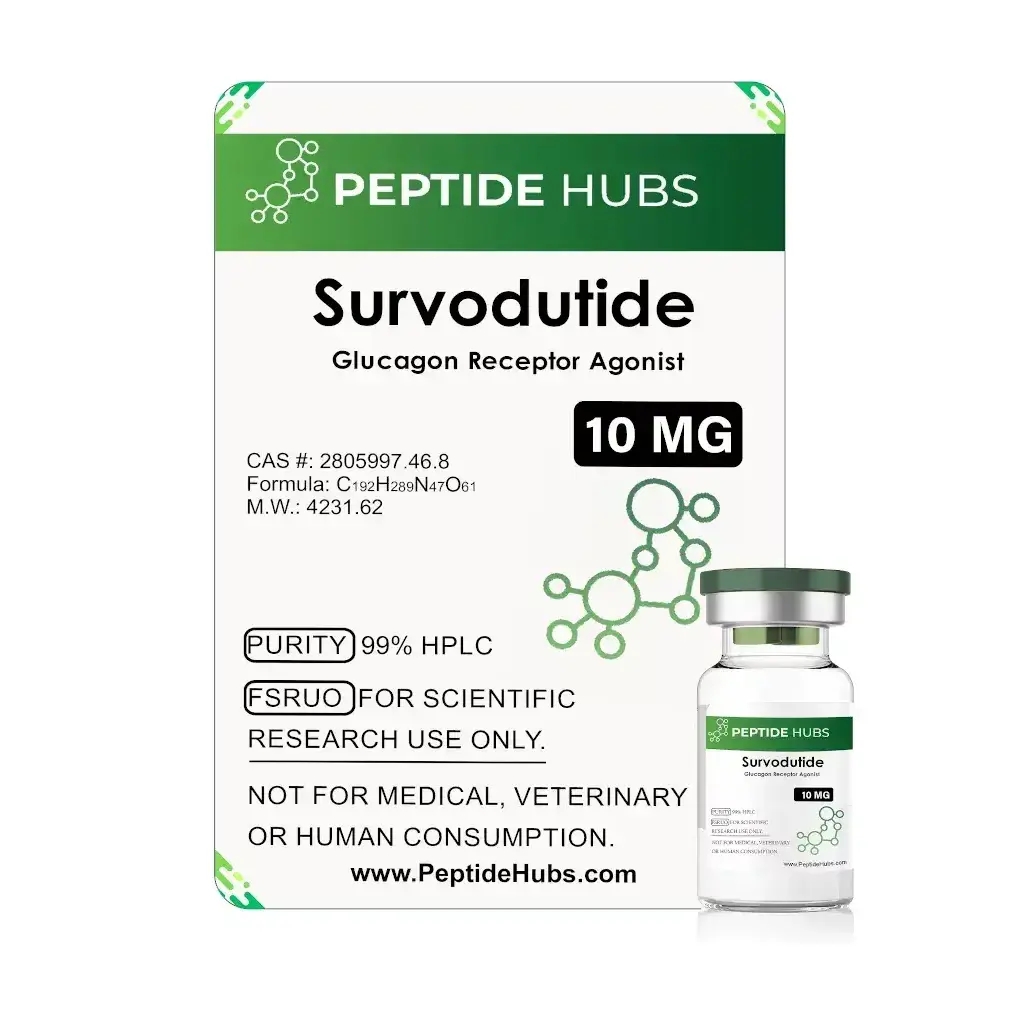
SURVODUTIDE 10 MG INJECTION
Drug Class: GLP-1 & Glucagon Receptor Dual Agonist Peptide
Composition:
- Active Substance: Survodutide
- Concentration: 10 mg per vial
Presentation: 2 mL Vial
Form: Lyophilized Powder for Reconstitution
Manufacturer: Peptide Hubs
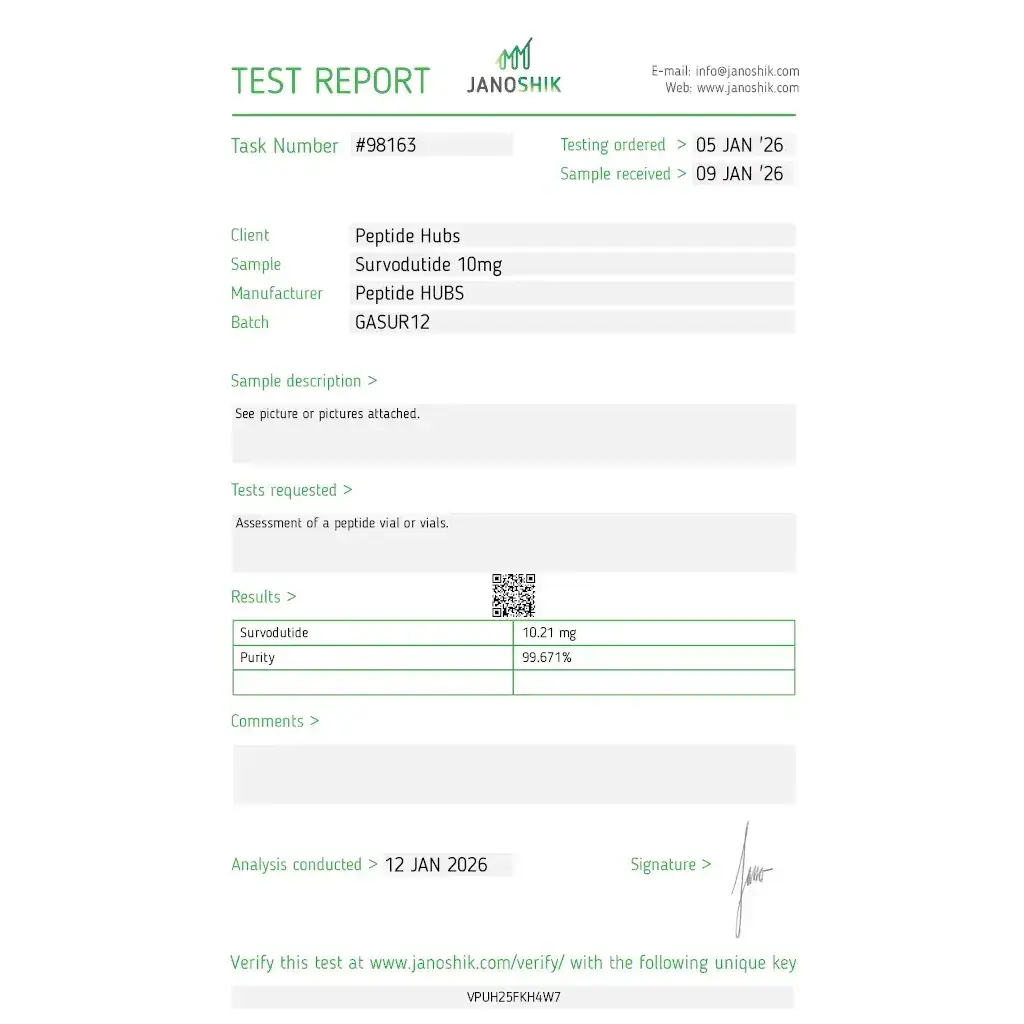
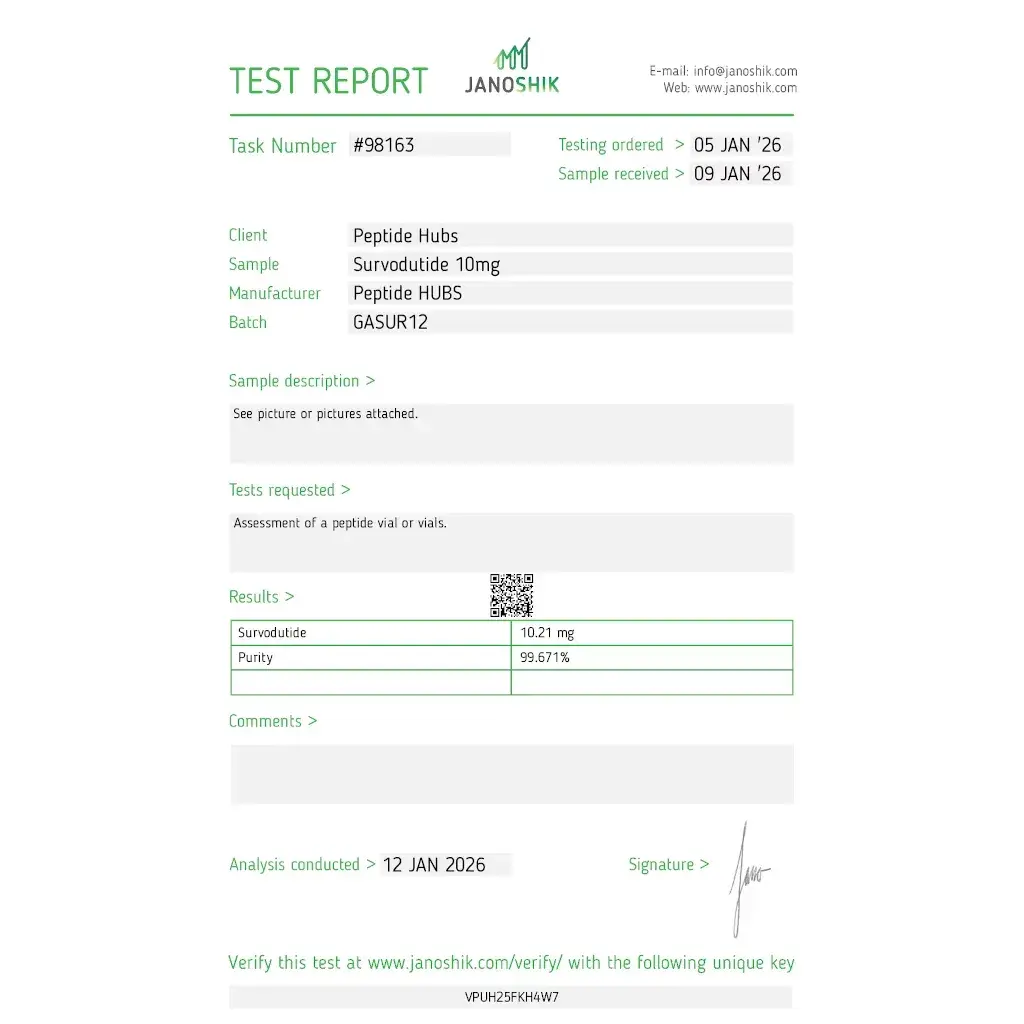
Tested in Laboratory: View Lab Report
Peptide Hubs presents Survodutide 10 mg, a cutting-edge dual agonist research peptide designed for advanced metabolic studies. This compound simultaneously targets both the GLP-1 (glucagon-like peptide-1) and GCGR (glucagon receptor) pathways, offering a unique mechanism for investigating weight management, glucose control, and hepatic function. Provided as a 10 mg lyophilized powder in a sterile 2 mL vial, this product ensures high purity and stability for precise laboratory work. Survodutide's dual-action approach, as highlighted in emerging clinical research, represents a significant evolution beyond single-target GLP-1 agonists, making it a premier subject for scientific inquiry into obesity, metabolic syndrome, and related disorders. Peptide Hubs guarantees batch-tested quality for reproducible research outcomes.
The synergistic activation of GLP-1 and glucagon receptors produces a comprehensive metabolic profile in research models. The GLP-1 component promotes insulin secretion, slows gastric emptying, and enhances satiety in the brain, reducing caloric intake. Concurrently, the glucagon receptor agonism increases energy expenditure, promotes lipolysis in adipose tissue, and enhances hepatic glucose production and fatty acid oxidation. For researchers, this translates to several key observable effects in preclinical studies:
These effects make Survodutide a powerful tool for studying multi-faceted metabolic interventions.
Survodutide is a potent research chemical, and all protocols are for controlled laboratory studies. The 10 mg vial should be reconstituted with bacteriostatic water. A standard research dilution involves adding 1 mL of diluent to yield a concentration of 10 mg/mL. In experimental models, dosing is typically initiated at a very low level (e.g., 0.1-0.3 mg equivalents per week) and gradually titrated upwards over several weeks to model clinical escalation and assess tolerability. Administration is via subcutaneous injection. Given its extended half-life, dosing frequency in research often ranges from once weekly to once every two weeks. Meticulous sterile technique and precise volumetric measurement are critical for maintaining peptide integrity and ensuring valid, reproducible data.
Survodutide is studied in extended research cycles, typically 12 weeks or longer, to fully capture its cumulative effects on metabolism and body composition. For complex studies on physique optimization, performance, and systemic health, researchers may design protocols that combine Survodutide with other Peptide Hubs compounds to investigate complementary biological pathways. These are strictly concepts for experimental design.
In research models, the side effect profile of Survodutide is primarily gastrointestinal, stemming from its potent GLP-1 activity. These include dose-dependent nausea, vomiting, diarrhea, and constipation. The glucagon component may contribute to transient increases in heart rate and energy expenditure. More serious considerations for ethical research involve monitoring for potential hypoglycemia (especially in fasted models), pancreatitis, and gallbladder-related events. A notable research challenge is managing the catabolic environment it creates; studies must be designed to investigate muscle preservation strategies concurrently. The foremost risks remain technical: contamination, dosage inaccuracy, and lack of proper veterinary care and monitoring.
Survodutide's research value lies in its balanced dual agonism. It activates the GLP-1 receptor, leading to increased cAMP in pancreatic beta-cells (enhancing glucose-dependent insulin secretion) and in brain regions regulating appetite. Simultaneously, its activation of the glucagon receptor in the liver promotes gluconeogenesis and glycogenolysis (increasing energy availability) and stimulates fatty acid oxidation. This creates a unique "energy deficit plus energy expenditure" model: reducing intake while increasing the body's use of stored fat for fuel. This makes it an exceptional compound for studying the nuances of energy balance, nutrient partitioning, and the treatment of complex metabolic diseases.
Survodutide has a distinct dual target: GLP-1 + Glucagon receptors. Semaglutide is a GLP-1-only agonist. Tirzepatide is a dual GLP-1 + GIP agonist. The addition of glucagon receptor agonism (Survodutide) is specifically theorized to enhance energy expenditure and liver fat metabolism more significantly than GIP agonism, making it a unique subject for research on hepatic steatosis and metabolic rate.
Based on clinical trial data, research models often employ a slow titration to mitigate GI side effects. A protocol may start at a low dose (e.g., 0.1-0.3 mg weekly) for 2-4 weeks, then increase by 0.2-0.4 mg every 4 weeks until reaching a target research dose (e.g., 1.2-2.4 mg weekly). This allows for the collection of dose-response data and assessment of adaptation.
Unreconstituted vials must be stored refrigerated at 2-8°C (36-46°F). Once reconstituted with bacteriostatic water, the solution remains stable for up to 30-60 days when refrigerated. Do not freeze the reconstituted solution. Always inspect for clarity and absence of particles before use in any study. Discard if cloudy.
This is a critical area of research. The significant calorie deficit induced by Survodutide is inherently catabolic. Therefore, concurrent research often focuses on strategies to preserve lean mass. This includes studying its effects alongside adequate protein intake models, resistance training protocols, and potentially combining it with compounds that have anabolic or anti-catabolic properties, such as Tesamorelin (to reduce visceral fat while potentially supporting muscle) or selective androgen receptor modulators in controlled experimental settings.
Please log in to write Survodutide 10 mg review.
SERMORELIN 5 MG INJECTION
Drug Class: Growth Hormone-Releasing Hormone (GHRH)
Composition:
- Active Substance: Sermorelin
- Concentration: 5 mg/vial
Presentation: 2 mL Vial
Form: Lyophilized Powder
Manufacturer: Dragon Pharma
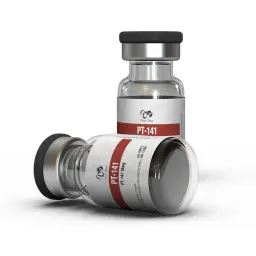
BREMELANOTIDE 10 MG INJECTION
Drug Class: Selective Melanocortin Receptor Agonist
Composition:
- Active Substance: Bremelanotide
- Concentration: 10 mg/vial
Presentation: 2 mL Vial
Form: Lyophilized Powder
Manufacturer: Dragon Pharma
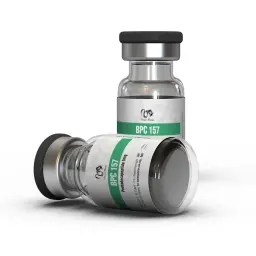
PENTADECAPEPTIDE 2 MG INJECTION
Drug Class: Healing/Repair Peptide
Composition:
- Active Substance: Pentadecapeptide
- Concentration: 5 mg/vial
Presentation: 2 mL Vial
Form: Lyophilized Powder
Manufacturer: Dragon Pharma
Tested in Laboratory: View Lab Report
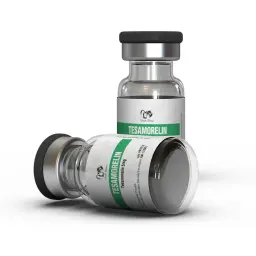
TESAMORELIN 5 MG INJECTION
Drug Class: Growth Hormone-Releasing Hormone (GHRH)
Composition:
- Active Substance: Tesamorelin
- Concentration: 5 mg/vial
Presentation: 2 mL Vial
Form: Lyophilized Powder
Manufacturer: Dragon Pharma
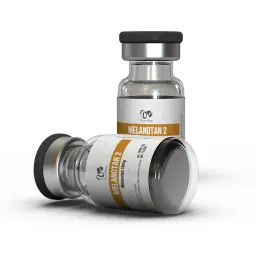
MELANOTAN 2 10 MG INJECTION
Drug Class: Synthetic Melanocortin Receptor Agonist
Composition:
- Active Substance: Melanotan 2
- Concentration: 10 mg/vial
Presentation: 2 mL Vial
Form: Lyophilized Powder
Manufacturer: Dragon Pharma
Tested in Laboratory: View Lab Report
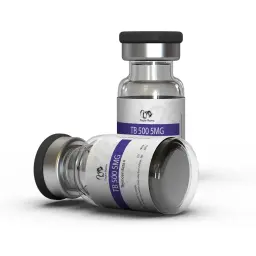
THYMOSIN BETA-4 5 MG INJECTION
Drug Class: Tissue Healing & Recovery Peptide
Composition:
- Active Substance: Thymosin Beta-4
- Concentration: 5 mg/vial
Presentation: 2 mL Vial
Form: Lyophilized Powder
Manufacturer: Dragon Pharma
Tested in Laboratory: View Lab Report