


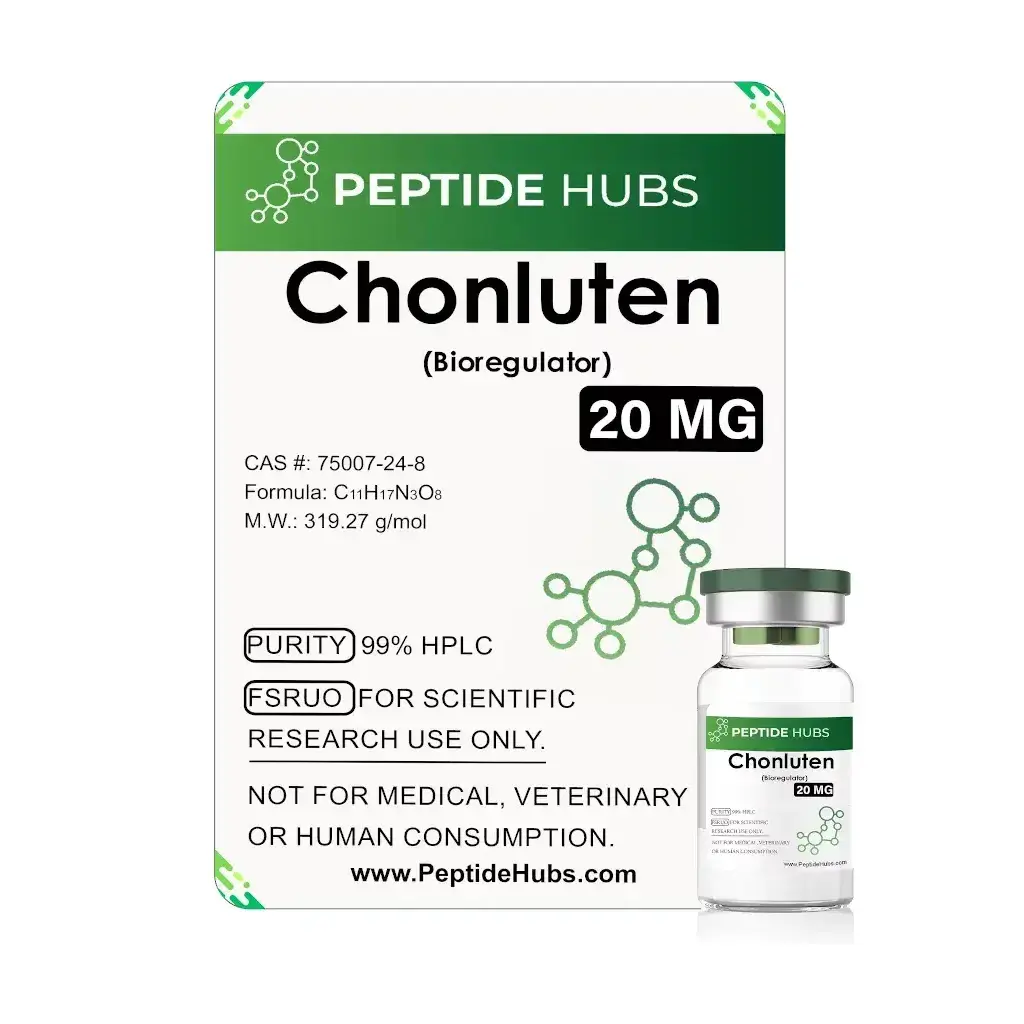
CHONLUTEN 20 MG INJECTION
Drug Class: Synthetic Peptide Bioregulator / Respiratory Peptide
Composition:
- Active Substance: Chonluten (Lung Tissue Bioregulator)
- Concentration: 20 mg per vial
Presentation: 2 mL Vial
Form: Lyophilized Powder for Reconstitution
Manufacturer: Peptide Hubs
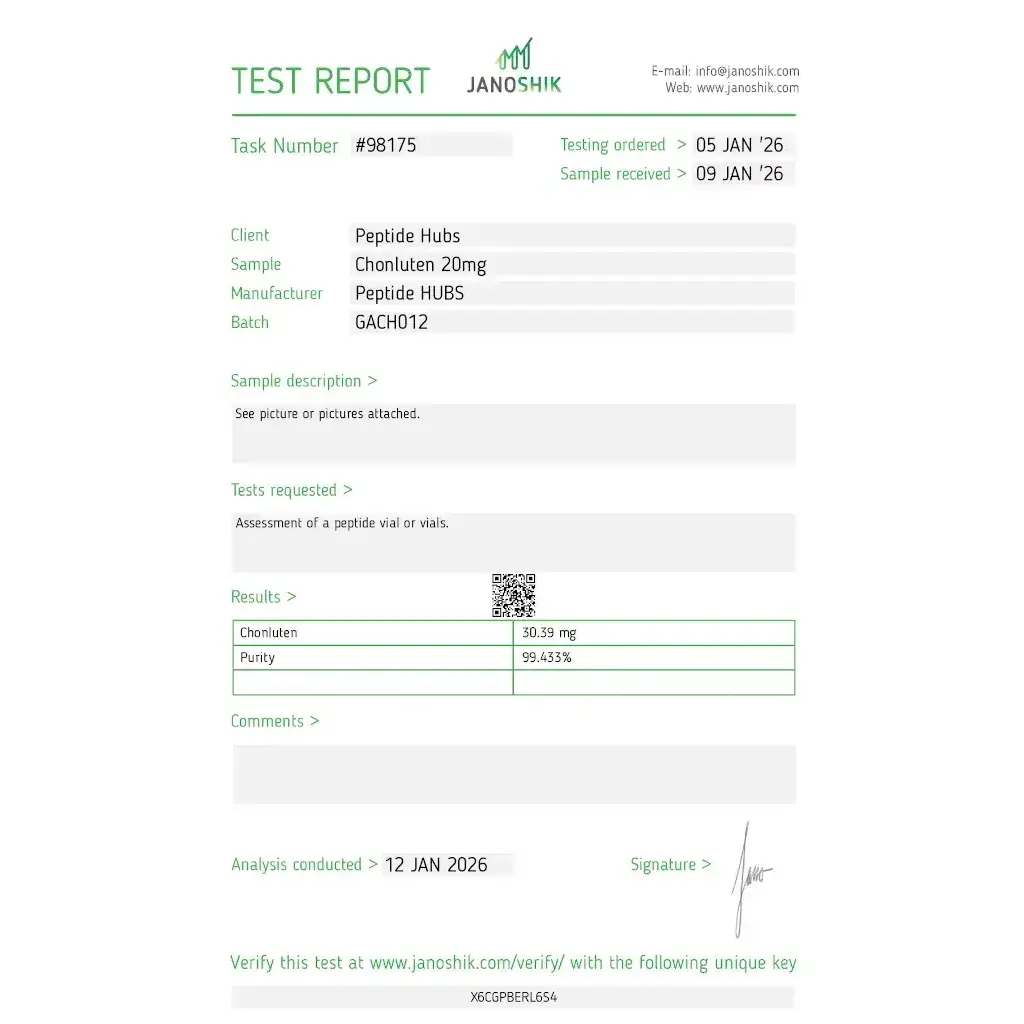
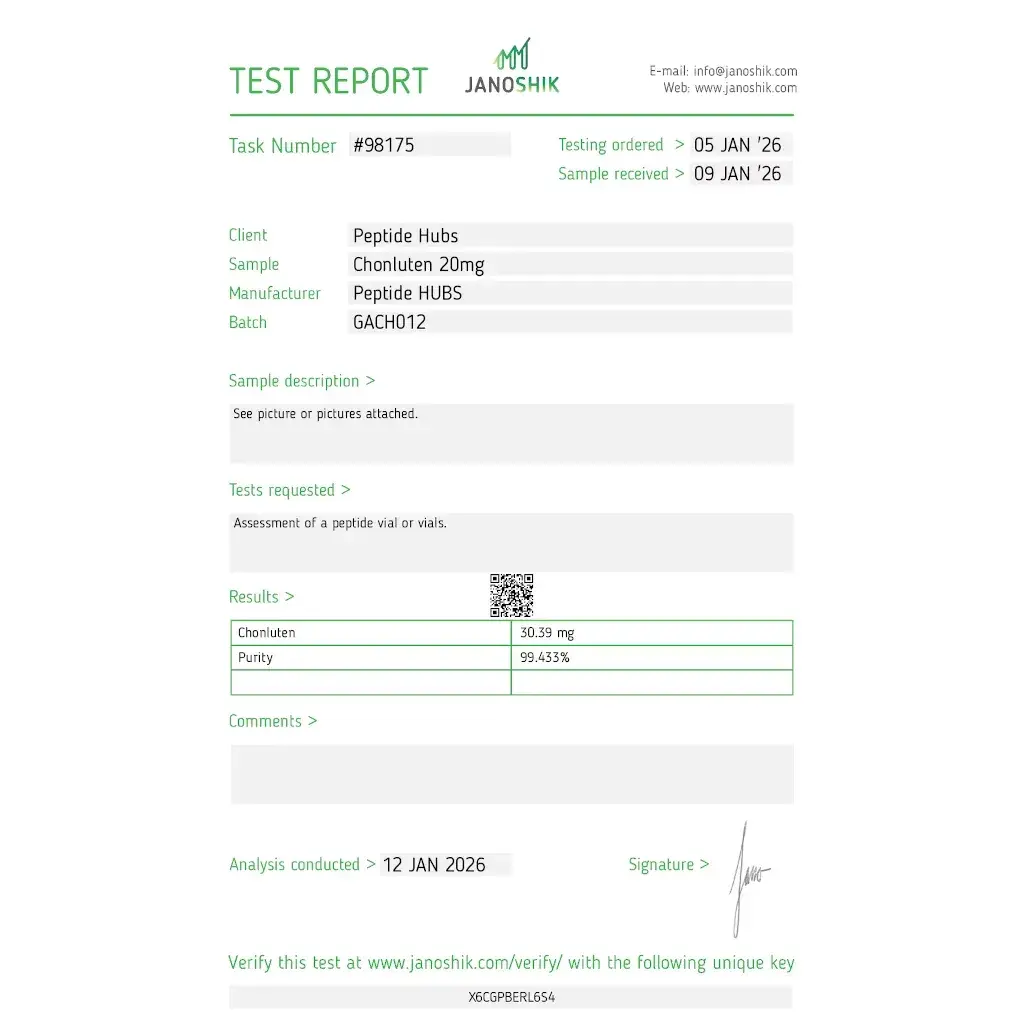
Tested in Laboratory: View Lab Report
Peptide Hubs introduces Chonluten 20 mg, a specialized synthetic peptide bioregulator derived from lung tissue extracts, designed for targeted research into respiratory system homeostasis and protection. Composed of short, organ-specific amino acid sequences, this 20 mg lyophilized powder in a 2 mL vial serves as a precise tool for modulating gene expression related to pulmonary epithelial regeneration, cytokine balance, and antioxidant defense. Preclinical research, as discussed in studies on tissue-specific peptides, indicates that such bioregulators can support the functional state of specific organs by normalizing protein synthesis in aged or stressed cells. For athletes and performance researchers, optimal lung function and oxygen exchange are critical for endurance and recovery, making pulmonary health a vital, though often overlooked, component of overall performance. Peptide Hubs ensures high-purity Chonluten for reliable, reproducible studies in respiratory biology and integrative physiology.
Chonluten's research focus is organ-specific, targeting the structural and functional integrity of lung tissue. Its observed effects in preclinical models are centered on supporting pulmonary resilience and efficiency:
Chonluten is a research peptide bioregulator, and all dosing is for controlled laboratory studies. The 20 mg vial is typically reconstituted with 2 mL of bacteriostatic water, yielding a concentration of 10 mg/mL. In experimental models, dosing protocols for organ-specific peptides like Chonluten often involve a course of administration rather than continuous use. A common research approach is a short, defined cycle: for example, 10 days of daily administration followed by a prolonged break (e.g., 1-3 months). Daily doses in animal studies are often calculated in the microgram per kilogram range. Administration is typically via subcutaneous injection, though some studies may explore oral administration for mucosal effects. Sterile technique is essential, and researchers must adhere to species-specific ethical guidelines.
Research with Chonluten typically involves short, intermittent cycles (e.g., 10-20 days) designed to "reset" or support organ function, followed by extended off-periods. For comprehensive studies on systemic performance, recovery, and organ support, researchers may design protocols combining Chonluten with other Peptide Hubs compounds that target complementary systems. These are strictly concepts for experimental design.
In preclinical research, peptide bioregulators like Chonluten are generally associated with a very low side effect profile due to their tissue-specific, regulatory (rather than strong pharmacological) action. Potential effects are typically mild and transient, possibly including minor reactions at the injection site. The primary research consideration is the theoretical risk of over-stimulating cellular processes in the target organ, though this is considered low with standard research dosing protocols. As with all research peptides, the most significant risks are technical: contamination from non-sterile technique, dosage inaccuracies, and the absence of proper veterinary care and ethical oversight. Researchers must design studies with appropriate monitoring for organ function.
Chonluten belongs to a class of peptides known as cytomedins or tissue-specific peptide bioregulators. Its proposed mechanism is epigenetic and translational. The short amino acid sequences are thought to act as signaling molecules that can bind to DNA or influence transcription factors, thereby normalizing the expression of genes specific to lung tissue that may have become dysregulated due to age, stress, or environmental insult. This is not a "drug-like" blocking or stimulating effect, but a gentle nudging of cellular activity back to an optimal functional state. This makes it a unique research tool for studying organ resilience, the interaction between systemic stress (like intense exercise) and organ-specific health, and potential strategies for maintaining peak physiological function across all organ systems.
Peptide bioregulators are short, organ-specific peptides believed to help normalize protein synthesis and cellular function in aging or stressed tissues. In research, Chonluten is used to study its effects on lung tissue homeostasis. Scientists administer it in models to investigate its influence on markers of epithelial health, inflammation, antioxidant capacity, and overall respiratory function, often in the context of oxidative stress or aging.
The theory behind short-cycle administration is based on the concept of "epigenetic reprogramming" or resetting gene expression. The idea is that a brief, defined period of peptide signaling is sufficient to initiate a shift in cellular activity that the body then maintains. Prolonged continuous administration is not typically used, as it may not provide additional benefit and could theoretically lead to habituation. This pulsed approach is a hallmark of bioregulator research.
Yes, potentially. Intense exercise, especially endurance training, places high demands on the respiratory system. It increases ventilation rate and can generate oxidative stress in lung tissue. Research using Chonluten can model whether supporting pulmonary cellular health and antioxidant defenses improves resilience to this stress, potentially aiding in recovery between sessions and maintaining optimal lung function—a key factor in performance and stamina.
Store unopened vials refrigerated at 2-8°C (36-46°F). For long-term storage, freezing at -20°C is acceptable. To reconstitute, add 2 mL of bacteriostatic water to the 20 mg vial, gently swirling to create a 10 mg/mL solution. Once reconstituted, the solution should be used promptly and can be stored refrigerated for a short period (up to 7-10 days). Always inspect for clarity before use.
Please log in to write Chonluten 20 mg review.
SERMORELIN 5 MG INJECTION
Drug Class: Growth Hormone-Releasing Hormone (GHRH)
Composition:
- Active Substance: Sermorelin
- Concentration: 5 mg/vial
Presentation: 2 mL Vial
Form: Lyophilized Powder
Manufacturer: Dragon Pharma
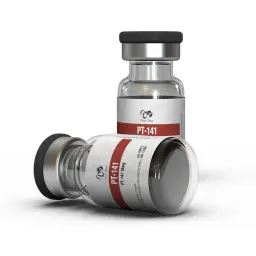
BREMELANOTIDE 10 MG INJECTION
Drug Class: Selective Melanocortin Receptor Agonist
Composition:
- Active Substance: Bremelanotide
- Concentration: 10 mg/vial
Presentation: 2 mL Vial
Form: Lyophilized Powder
Manufacturer: Dragon Pharma
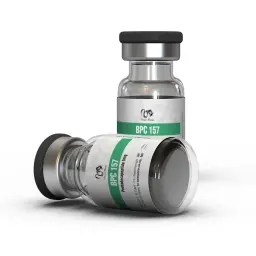
PENTADECAPEPTIDE 2 MG INJECTION
Drug Class: Healing/Repair Peptide
Composition:
- Active Substance: Pentadecapeptide
- Concentration: 5 mg/vial
Presentation: 2 mL Vial
Form: Lyophilized Powder
Manufacturer: Dragon Pharma
Tested in Laboratory: View Lab Report
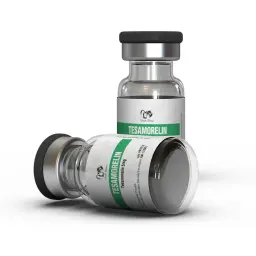
TESAMORELIN 5 MG INJECTION
Drug Class: Growth Hormone-Releasing Hormone (GHRH)
Composition:
- Active Substance: Tesamorelin
- Concentration: 5 mg/vial
Presentation: 2 mL Vial
Form: Lyophilized Powder
Manufacturer: Dragon Pharma
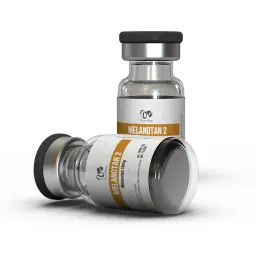
MELANOTAN 2 10 MG INJECTION
Drug Class: Synthetic Melanocortin Receptor Agonist
Composition:
- Active Substance: Melanotan 2
- Concentration: 10 mg/vial
Presentation: 2 mL Vial
Form: Lyophilized Powder
Manufacturer: Dragon Pharma
Tested in Laboratory: View Lab Report
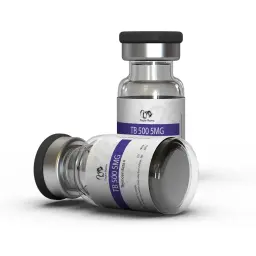
THYMOSIN BETA-4 5 MG INJECTION
Drug Class: Tissue Healing & Recovery Peptide
Composition:
- Active Substance: Thymosin Beta-4
- Concentration: 5 mg/vial
Presentation: 2 mL Vial
Form: Lyophilized Powder
Manufacturer: Dragon Pharma
Tested in Laboratory: View Lab Report